Tuesday, April 12, 2016

PINEAL GLAND..

There is an endocrine gland within our bodies that, when unimpeded, receives more blood flow per cubic volume than almost any organ in the body, including the heart.[1][2] It has been written about in masked language, or painted in art throughout the ages, and represented in a staggering number of ways for thousands of years – yet modern medicine hasn’t found it interesting enough to study clinically – or has it?
The pineal gland’s true purpose is shrouded in mystery. Is this intentional?
Will it take an information coup to keep us from being estranged from the cosmic gifts which so many of our ancestors refer to as being locked within this tiny pine-cone shaped mass of cells, or is there modern, scientific corroboration for what the ancients called the Epicenter of Enlightenmentjust waiting for us to peruse?

Basics of the Pineal Gland

On the surface level, the ‘Pine’al’ gland, shaped like a pinecone, is at the geometric center of our brain and is intimately entwined with our perception of light. The pineal gland modulates circadian rhythms, and thus how we sleep. It remains uniquely isolated from the blood-brain barrier system, yet receives a higher percentage of blood flow than any other organ of the body except the kidneys. The pineal gland is tiny – smaller than a dime – located at the back of the roof of the third ventricle of the brain. (The ventricles are parts of the brain filled with cerebrospinal fluid (CSF), which act to maintain the optimum chemical environment for the central nervous system cells). The pineal becomes steadily calcified with age, starting most often before puberty, meaning it shows up clearly on skull X-rays and CT scans to allow identification of the midline.[3]
It is worth mentioning here that sodium fluoride calcifies the pineal gland. British scientist Jennifer Luke published a study showing that fluoride deposits accumulate in the pineal gland and calcify it. Just as bones go through a process of calcification to harden – a good thing, necessary for our health and functioning, the pineal gland can become ‘hardened’ through calcification, but to our greatest detriment, the reasons for which will be explained as you read further.
Additionally, a 450 page review on fluoride toxicity published by the National Research Council in 2006 reported that fluoride produced a range of negative side effects including “decreased melatonin production” and “other effects on normal pineal function, which in turn could contribute to a variety of effects in humans.”

The Pineal, Light, and Melatonin Production 

The light-transducing ability of the pineal gland has led some to call the pineal the “third eye”. Oddly, the pineal contains rods and cones, just like our eyes in order to process light, even though it is smack dab in the center of our ‘dark’ brains. The gland is also responsible for creating and secreting melatonin. Melatonin communicates with our hormonal system about environmental light to the rest of the body and can entrain us to a certain biological rhythm, but there’s more to melatonin than just regulating our sleep-wake cycles.
The precursor to melatonin is serotonin, which is stored in large quantities by the pineal gland – a hormone you may have heard of since it is so keenly linked with feeling good. Without proper serotonin creation in the body, the result is depression, and sometimes severe depression. Of the 40 million cells in our brains, serotonin interacts or communicates with almost all of them.[4]

Is the Pineal Responsible for Spontaneous Realization or Psychedelic Experience?

On a spiritual level, people in hundreds of cultures throughout the world have credited the pineal gland’s proper functioning with spontaneous spiritual experiences.Does it produce a psychedelic chemical or chemicals that allows us to exit into other dimensions, and even to enter and exit physical form? Does it allow an escape from this physical world in which we are currently held prisoner? What, truly, does this mysterious gland really do?
The pineal gland forms in a human embryo at 49 days during gestation – which just happens to also be the amount of time it takes, according toTibetan Buddhists, for a soul to reincarnate into their next physical body.[5]
Other historical as well as natural references to the pineal gland[6], and so many of them, would certainly pique the interest of most any modern scientist studying the brain, the endocrine system, botany, or even human intelligence, but there seems to be a shrouding of the mysteries of the pineal, for reasons which might become more obvious after reading further. For example:
  • The pinecone happens to be the evolutionary precursor to the flower, with the spines spiraling in a perfect Fibonacci sequence, just like the sacred geometry of a rose, a sunflower, or a nautilus shell.
  • The Staff of Osiris from the Egyptian culture, dating back to approximately 1224 BC, depicts two intertwining serpents rising up to meet at a pinecone.
  • Hindu gods are carved, sculpted or drawn holding a pinecone in an outstretched hand, and perhaps the most prominent ‘God’ in this multi-theistic culture, Shiva, is often depicted with hair that looks like a pinecone on his head.
  • Ancient Assyrian palace carvings, dating back to 713-716 BC depict four-winged God-like figures purposefully holding pinecones up.
  • The Mexican god “Chicomecoatl” (Seven Snakes) depicts the deity offering pinecones in one hand, and an evergreen tree in the other.
  • Dionysus, from Greek and Roman culture often carried a fennel staff topped with a pinecone.
  • The pineal gland is the only part of the brain that isn’t bifurcated, and in Matthew 6:22 of the Christian bible it says, “The light of the body is the eye: if therefore your eye be single, your whole body shall be full of light.”
  • Egyptian, Druidic, Hindu, Hasidic, Islamic, Taoist, Mayan, Tibetan and Aboriginal cultures all acknowledge the pineal gland in their art and literature.
  • Even the Catholic Pope’s staff often has a pinecone on it. You can also see a pinecone in the Vatican flag.[7]

pineal-gland-and-eye-of-horusThe Pineal, METAtonin, and OBEs

Here’s where the mainstream science on the pineal gets rather thin, to say they least. The pineal is also directly linked to the creation of METAtonin –  a close cousin of melatonin, sometimes called a “high octave melatonin.” The main psychoactive ingredient in METAtonin is DiMethyl Tryptamine or DMT. DMT, as talked about extensively by Terence McKenna and Dr. Rick Strassman, is thought to be responsible for many people’s out-of-body (OBE) experiences, yet the scientific data on these is rare and in its infant stages.
The Cottonwood Research Foundation of New Mexico found that the pineal gland of rodents does indeed produce endogenous DMT:Rodents and humans have a very similar cellular structure and that is why they are used for endocrine research.[8]
METAtonin does not suppress waking self-consciousness the same way melatonin does during sleep; instead it modifies the borders of consciousness by temporarily reprogramming our brain circuitry in a way which allows self consciousness (ego-identification) to separate from the body consciousness while remaining aware.
Andra Smith and Claude Messier, for example, conducted a study utilizing fMRI imaging at the University of Ottawa Department of Neuroscience[9] concluding that the OBE is alteration of the brain’s somatosensory (body placement) circuitry that creates the illusion of being displaced from the body. However, since consciousness cannot be measured or detected in any way, this conclusion is likely false and minimally premature.
Anthony Peake suggests that every cell in the body is a repository of information that OBConsciousness can access. His theory is that DNA molecules within cells intercommuicate to create a holographic cloud of information and that within this cloud we can find micro Einstein-Rosen wormholes that allow OBConsciousness to access distant parts of the universe and parallel realities. In essence, our experience of past, present and future is an illusion, and the pineal gland’s proper functioning allows a form of ‘time’ travel, which also amounts to ‘space’ travel.[10]

Pineal-snakes
Rupert Sheldrake furthers that an OBE experience, through the opening of the pineal gland, allows us to get in touch with the planetary morphogenetic field via “morphic resonance.” Now if you recall thedivine geometry referred to earlier, and contemplate the profound affect resonance or vibration has upon the human organism, all these super strange theories start to make a lot of sense – despite mainstream science’s complete blackout of information regarding these phenomena.
Sheldrake states[11]:
“Morphic resonance is a process whereby self-organising systems inherit a memory from previous similar systems. In its most general formulation, morphic resonance means that the so-called laws of nature are more like habits. The hypothesis of morphic resonance also leads to a radically new interpretation of memory storage in the brain and of biological inheritance. Memory need not be stored in material traces inside brains, which are more like TV receivers than video recorders, tuning into influences from the past. And biological inheritance need not all be coded in the genes, or in epigenetic modifications of the genes; much of it depends on morphic resonance from previous members of the species. Thus each individual inherits a collective memory from past members of the species, and also contributes to the collective memory, affecting other members of the species in the future.”

The Pineal as the Gate to Epiphany

The potential for internally produced DMT-based METAtonin to influence the circuitry of the brain has been an ever-present component of human evolution[12] – so much so that its influence may have played a major part in many of our greatest discoveries and epiphanies.
Those among us who pursue creative/spiritual lifestyles usually learn to temporarily glean some of these secrets or at least get a glimpse of these alternate perspectives, but by opening the ‘gates’ of the pineal gland through the production of DMT, we can access realities which likely hold the larger secrets of the ages. It can also fuel our future spiritual realization. We cannot allow the pineal gland to be left shut in the brain as a tiny, un-researched mass of cells. Though consciousness likely does not have a physical point of origination, the pineal gland seems to act as an anchor for the secrets of the Universe – and its right here, inside of us.

Saturday, April 9, 2016

EPSON -NEW LEGACY PAPER LINE.... PHOTOGRAPHIC

Epson Unveils New Legacy Paper Line

LEGACY_3D_13x19_BOX
Epson has announced its most advanced line of photographic papers: Epson Legacy Papers. Designed in collaboration with many of the world’s greatest artists, these unique papers were developed for those who intend to exhibit and sell their prints. Working closely with revered European papermakers, galleries, and chemical engineers to develop the finest papers available, the Epson Legacy Paper line produces outstanding black density and color fidelity, along with exceptional archival properties required for collectible works of fine art.
The Legacy Paper line introduces four papers that utilize an industry leading microporous inkjet receiver layer to produce deep, rich blacks, expanded color gamut, and smooth tonal gradations with outstanding image permanence. Using old world craftsmanship, along with the latest technological advancements in papermaking, allows for a consistent line of high-end papers printmakers can rely upon.
  • Legacy Platine: 100 percent cotton fibre paper with a bright OBA-free, smooth satin finish. With a unique feel of an artistic paper of centuries past, along with an outstanding color gamut, this paper is exceptional for both color and black and white printmaking.
  • Legacy Fibre: 100 percent cotton fibre paper with an exceptionally bright OBA-free, smooth matte finish. With an outstanding black density, this paper is ideal for all types of high-end printmaking.
  • Legacy Baryta: A baryta paper with a white, smooth satin finish, utilizing two barium sulfate coatings. Inspired by the F64 group, this paper takes the best of revered silver halide technology to new levels of quality.
  • Legacy Etching: 100 percent cotton fibre paper with a bright OBA-free, uniquely textured matte finish beloved by artists for centuries. This paper has the feel of traditional etching papers. 
For additional information on all four Legacy Papers, visit epson.com/legacypapers.

A Brief History of HAPPENINGS IN 1960'S IN NEW YORK


A Brief History of “Happenings” in 1960s New York

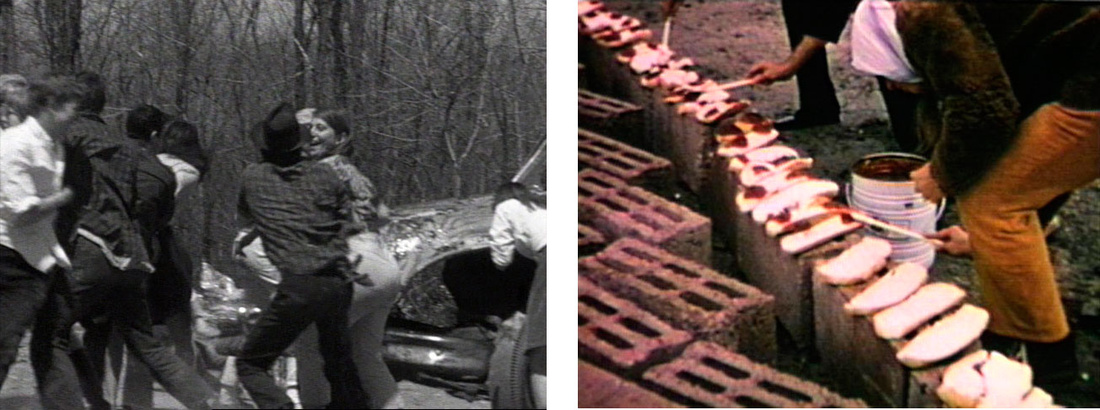
Left: Allan Kaprow,  Household (film still), 1964. Documentation of a Happening commissioned by Cornell University, Ithaca NY; Right: Allan Kaprow, Sweet Wall (film still), 1970. Documentation of a Happening, Galerie René Block, West Berlin. © Allan Kaprow Estate, courtesy of the Estate and Hauser & Wirth.
A man dressed all in red feverishly paints the words “I LOVE WHAT I’M DOING, HELP” on a large canvas, pours two jars of paint over his head, then proceeds to dive headfirst through his finished work. A woman, cradled in the arms of her dance partner, takes a bite from a loaf of challah while reading the Sunday comics. A man wearing a nine-foot-tall costume of a foot performs a routine on the floor of a school gym with another man dressed as a human torso.
These are scenes that unfolded before audiences in a handful of New York galleries and spaces at the start of the 1960's. “Happenings,” as the performances were known, combined elements of dance, theater, music, poetry, and visual art to blur the boundaries between life and art and forge a path for new methods of artistic practice. But for all their historical significance, this genre of work remains elusive and ephemeral—art historian Kirk Varnedoe once said that attempting to preserve the Happenings would be “like trying to catch wind in a butterfly net.”

What were the Happenings?

In October 1959, artist and Rutgers professor Allan Kaprow presented 18 Happenings in 6 Parts at the Reuben Gallery in New York’s East Village. Although he had experimented with the form earlier, this marked the first use of the term “Happening.” (The invitation studiously avoided labels, however, stating: “The present event is created in a medium which Mr. Kaprow finds refreshing to leave untitled.”)
Left: Allan Kaprow, Sweet Wall (film still), 1970. Documentation of a Happening, Galerie René Block, West Berlin; Right: Allan Kaprow,  Household (film still), 1964. Documentation of a Happening commissioned by Cornell University, Ithaca NY. © Allan Kaprow Estate, courtesy of the Estate and Hauser & Wirth.
For the 90-minute 18 Happenings, Kaprow constructed three rooms within the gallery from plastic sheeting and wooden beams, each meant to house six separate but simultaneous actions—such as a woman seated and squeezing oranges, two performers proclaiming a nonsensical series of single-syllable words, and painters emblazoning lines and squares on either side of a hanging canvas. Kaprow orchestrated the events with the help of a meticulously planned script of stage directions and scores. Invitations had been sent out informing spectators that “you will become part of the happenings; you will simultaneously experience them.” Each audience member was given instructions upon entering the gallery, specifying when to move seats or applaud.
Although the following four years would see Happenings organized by a range of artists, each with their own distinctive style, all could be characterized by a rough-around-the-edges aesthetic. “Everything about the production was as crude and as primitive as it could be, because nobody really had any money to spend on any of this stuff,” the artist Robert Whitman told the New York Times in retrospect. And while Happenings often had a structure, there was no character development or plot: “It was generally more visual than traditional theater: the accent was on the plastic composition more than storytelling.”

Where did they come from?

The New York Happenings drew inspiration from a variety of sources. In Europe, there were already numerous examples of visual artists experimenting with performance. In early 20th-century Italy, the Futurists had in some instances replaced actors with machinery and moving lights in their performances. In 1920 s and ’30 s Germany, Oskar  Schlemmer organized theatrical events at the Bauhaus, combining the skills of resident designers, dancers, and artists. In mid-century France, Yves Klein dragged nude models covered in paint across canvases as spectators looked on.
In the United States, experimental composer and musician John Cage was particularly influential in the development of the Happenings. In 1952, he organized an event at Black Mountain College—a 45-minute performance in which participants engaged in actions of their choosing—that would be seen as a precursor to Kaprow’s later explorations. Robert Rauschenberg, for example, hung his “White Paintings” from the rafters and projected slides onto them, while choreographer Merce Cunningham danced throughout the room.
But it was Kaprow’s musings on the legacy of Jackson Pollock that most clearly laid the foundations for the movement. In a 1958 essay for ARTnews, he wrote, “Pollock, as I see him, left us at the point where we must become preoccupied with and even dazzled by the space and objects of our everyday life.” The action implicit in the Abstract Expressionist’s legendary drip paintings would become explicit with the Happenings, which were also influenced by the concept of assembling found objects that originated with the Dadaists and continued with Rauschenberg’s Combines.

Who were the major players?

Kaprow, an academic and artist, was widely considered the leader of the group. His Happenings were often the most boundary-pushing, placing viewers in positions of extreme unease, even fear—during “A Spring Happening,” members of the audience stood in narrow tunnels, exposed to rapidly flashing lights and eardrum-rattling sounds. The Happening concluded with a blank-faced performer walking towards the audience pushing an electric lawnmower, forcing them back towards the lobby. During most performances, one or two people would flee the room, overwhelmed.
Although the term “Happening” hints at a spontaneous event, they were determined by whichever artist was in charge. Kaprow’s were carefully planned and deeply intellectual. Red Grooms, on the other hand, often came up with the particulars for his Happenings—which were noisy, physical, and carnival-esque—on the fly. The Burning Building, which followed 18 Happenings in December 1959, featured a cast of characters including the Pasty Man (Grooms himself, wearing white face paint), the Girl in a White Box, and two Firemen. It was a great success with the audience; although Grooms planned for one performance per night, by popular demand it was performed four times on opening night. Its success led to the first group show for Happenings, “An Evening of Happenings,” in January 1960, organized by Kaprow. Whitman, whose Happenings tended towards the poetic, was included for the first time in this show with his work American Moon.
The following month, Jim Dine and Claes Oldenburg performed in the group show “Ray Gun Spex,” a series of seven performances within built environments they had constructed at New York’s Judson Gallery (the renovated basement of a church). Simone Forti, dancer and artist, was the only woman who devised a Happening of her own in the Reuben Gallery—two, in fact, entitled See Saw and Rollers. Carolee Schneemann was the other major female artist involved in planning the Happenings, joining the group in 1960 as a participant in one of Oldenburg’s events. Feminist artists would become leading pioneers of performance art in the late ’60s and ’70s.

Why did they matter?

The Happenings burned bright and fast, tapering off in 1963 when Kaprow moved on. Grooms and Oldenburg had already left to pursue other projects. News of the novel art form had started to travel—there were “thrill clubs” that came from Long Island to experience the Happenings and, for Oldenburg, the “audience became less and less interesting to me. I couldn’t really reach them.” The term “Happening” became such an accepted part of 1960s vernacular that it was used as a title for a song by girl group The Supremes.
Despite the brevity of the movement and the difficulty of reconstructing the original events, the Happenings were formative for the artists involved. Oldenburg’s built environments, used as backdrops for several of his events, for example, marked the beginning of his experimentation with soft sculptures that would become his signature form of art, commenting on American culture and consumerism.  
Marta Minujín, Momentos de la performance Leyendo las noticias, 1965, Costanera Sur, Buenos Aires. Images via Wikimedia Commons.
The Happenings upended the conventions of what art could be, going beyond sculpture and painting to introduce a blending of mediums that would later become performance art and body art. Kaprow wrote in a 1966 essay that “the line between the Happening and daily life should be kept as fluid and perhaps indistinct as possible”—a revolution in the conception of artmaking, enticing artists to consider and reimagine audiences as part of their work. Although they remain an ephemeral moment in art history, the Happenings made a lasting impact on generations of artists.

—Abigail Cain

Friday, April 8, 2016

The genomes of the bacteria and viruses of the human gut alone are thought to encode 3.3 million genes. “The genetic richness and complexity of the bugs we carry is much richer than our own,”

Trillions of bacteria are hostile and can cause disease, while many others are friendly and have established a symbiotic, mutually beneficial relationship with us over the millennia. These friendly bacteria have also been referred to as “probiotics” and are being used increasingly by mainstream clinicians for both preventive and therapeutic purposes. The literal translation of the word probiotic is “for life.” A growing number of studies suggest that part of what determines how the human body functions may be not only our own genes, but also the genes of the trillions of microorganisms that reside on and in our bodies.
Bacteria Keep Us Alive 
The genomes of the bacteria and viruses of the human gut alone are thought to encode 3.3 million genes. “The genetic richness and complexity of the bugs we carry is much richer than our own,” says Jayne Danska, an immunologist at the Hospital for Sick Children Research Institute in Ontario, Canada. “They serve as a buffer and interpreter of our environment. We are chimeric organisms.”
Problems ranging from autoimmune disease to clinical depression and simple obesity may in fact be linked to immune dysfunction that begins with a “failure to communicate” in the human gut, scientists say. Health care of the future may include personalized diagnosis of an individual’s “microbiome” to determine what prebiotics or probiotics are needed to provide balance.
A role for gut microbes in gastrointestinal function has been well documented since researchers first described differences in the fecal bacteria of people with inflammatory bowel disease The molecular mechanisms responsible for the gut microbiome’s impact on metabolism and diseases throughout the body remain largely unknown. However, researchers are beginning to decipher how the microorganisms of the human intestinal tract influence biological functions beyond the gut and play a role in immunological, metabolic, and neurological diseases.
“Asked about their immune system, most people might think of white blood cells, lymph glands or vaccines,” said Dr. Natalia Shulzhenko, author of a new report in Clinical Reviews in Allergy and Immunology, and assistant professor and physician in the OSU Department of Biomedical Sciences. “They would be surprised that’s not where most of the action is. Our intestines contain more immune cells than the entire rest of our body.
Early research on microbiota focused largely on the commensal bacteria that reside in the human gut. Commensal gut bacteria supply nutrients, help metabolize indigestible compounds, and defend against colonization by nonnative opportunistic pathogens.

The Good and The Bad 
But the distinction between “good” microbes that aid health and “bad” pathogenic microbes that cause disease has become blurred in recent years. Researchers have shown that under certain conditions, some types of normal gut bacteria can trigger disease. Sarkis Mazmanian, a microbiologist at the California Institute of Technology, dubbed these elements “pathobionts”; the term “pathogens,” in contrast, refers tobopportunistic microbes that are not normally part of the gut microbial community.
Disturbances to the microbial equilibrium of the gut may mean that some microbes become overrepresented while others are diminished. “It’s like a garden–you’re less likely to have weeds growing if you have lush vegetation, but without this vegetation the weeds can potentially take over,” Mazmanian says. When the gut moves toward a state of microbial imbalance, normally benign gut microbes may begin to induce inflammation and trigger disease throughout the body, even in the nervous system.
Researchers have long postulated that gut bacteria influence brain function. A century ago, Russian embryologist Elie Metchnikoff surmised that a healthy colonic microbial community could help combat senility and that the friendly bacterial strains found in sour milk and yogurt would increase a person’s longevity.
In 2011 Mazmanian and colleagues reported that changes in gut microbial composition might have far-ranging effects that extend to the brain.
Mazmanian says, the microorganisms that colonize the human gut don’t leave the intestine, but the immune cells that contact them do. He explains that, although 70% of the immune cells in the body at any one time can be found in the intestine, they circulate throughout the body, and the microbiota of the gut environment help determine how immune cells will behave elsewhere. He gives an example: “If T-cells, while in the gut, are programmed by the microbiota to have anti-inflammatory properties, then they may suppress inflammation even after they leave the gut.”
Proteins, carbohydrates, and other molecules shed by microbes also leave the gut and may play a role in signaling disease. Studies have shown these bacterial metabolites are pervasive throughout the body–in the lungs, amniotic fluid, and breast milk, all tissues once thought to be free of microbial communities.
Other researchers have suggested a link between the gut–brain axis and neuropsychiatric disorders such as autism, depression, and eating disorders. The gut contains microorganisms that share a structural similarity with the neuropeptides involved in regulating behavior, mood, and emotion–a phenomenon known as molecular mimicry. The body can’t tell the difference between the structure of these mimics and its own cells, so antibodies could end up attacking both, potentially altering the physiology of the gut–brain axis.
The Power of Probiotics
Probiotics offset other intestinal bacteria that produce putrefactive and carcinogenic toxins. If harmful bacteria dominate the intestines, essential vitamins and enzymes are not produced and the level of harmful substances rises leading to cancer, liver and kidney disease, hypertension, arteriosclerosis and abnormal immunity. Harmful bacteria can proliferate under many different circumstances including peristalsis disorders, surgical operations of the stomach or small intestine, liver or kidney diseases, pernicious anaemia, cancer, radiation or antibiotic therapies, chemotherapy, immune disorders, emotional stress, poor diets and aging
The best known of the probiotics are the Lactobacilli, a number of species of which (acidophilus, bulgaricus, casei and sporogenes) reside in the human intestine in a symbiotic relationship with each other and with other microorganisms (the friendly Streptococci, E. coli and Bifidobacteria). Lactobacilli are essential for maintaining gut microfloral health, but the overall balance of the various microorganisms in the gut is what is most important.
Another probiotic which has recently generated a great deal of interest is the friendly yeast known as Saccharomyces boulardii, an organism that belongs to the Brewer’s Yeast family, not the Candida albicans group. S. boulardii is not a permanent resident of the intestine but, taken orally, it produces lactic acid and some B vitamins, and has an overall immune enhancing effect. In fact, it has been used therapeutically to fight candida infections.
6 SURPRISING FACTS ABOUT MICROBES IN YOUR GUT
1. What’s in Your Gut May Affect the Size of Your Gut
Need to lose weight? Why not try a gut bacteria transplant?
New research published in the journal Science suggests that the microbes in your gut may play a role in obesity.
2. Probiotics May Treat Anxiety and Depression
Scientists have been exploring the connection between gut bacteria and chemicals in the brain for years. New research adds more weight to the theory that researchers call “the microbiome–gut–brain axis.”
Research published in Proceedings of the National Academy of Science shows that mice fed the bacterium Lactobacillus rhamnosusshowed fewer symptoms of anxiety and depression. Researchers theorize that this is because L. rhamnosus acts on the central gamma-aminobutyric acid (GABA) system, which helps regulate emotional behavior.
L. rhamnosus, which is available as a commercial probiotic supplement, has also been linked to the prevention of diarrhea, atopic dermatitis, and respiratory tract infections.
3. The More Bacteria the Better
While bacteria on the outside of your body can cause serious infections, the bacteria inside your body can protect against it. Studies have shown that animals without gut bacteria are more susceptible to serious infections.
Bacteria found naturally inside your gut have a protective barrier effect against other living organisms that enter your body. They help the body prevent harmful bacteria from rapidly growing in your stomach, which could spell disaster for your bowels.
To do this, they develop a give-and-take relationship with your body.
“The host actively provides a nutrient that the bacterium needs, and the bacterium actively indicates how much it needs to the host,” according to research published in The Lancet.
4. Gut Bacteria Pass from Mother to Child in Breast Milk
It’s common knowledge that a mother’s milk can help beef up a baby’s immune system. New research indicates that the protective effects of gut bacteria can be transferred from mother to baby during breastfeeding.
Work published in Environmental Microbiology shows that important gut bacteria travels from mother to child through breast milk to colonize a child’s own gut, helping his or her immune system to mature.
5. Lack of Gut Diversity Is Linked to Allergies
Too few bacteria in the gut can throw the immune system off balance and make it go haywire with hay fever.
Researchers in Copenhagen reviewed the medical records and stool samples of 411 infants. They found that those who didn’t have diverse colonies of gut bacteria were more likely to develop allergies.
But before you throw your gut bacteria a proliferation party, know that they aren’t always beneficial.
6. Gut Bacteria Can Hurt Your Liver
Your liver gets 70 percent of its blood flow from your intestines, so it’s natural they would share more than just oxygenated blood.
Italian researchers found that between 20 and 75 percent of patients with chronic fatty liver disease–the kind not associated with alcoholism–also had an overgrowth of gut bacteria. Some believe that the transfer of gut bacteria to the liver could be responsible for chronic liver disease.
How Do Probiotics Work 
Probiotics work in many different ways by their production of antimicrobial substances (organic acids, hydrogen peroxide, and bacteriocins) that inhibit pathogen adhesion and degrade toxins produced by microbial invaders. Probiotics resist colonization by competing for binding sites as well as for nutrients with pathogens. In other words, they crowd out pathogens like candida and harmful E. Coli.
Probiotics secrete various proteins that stimulate the immune system both locally and throughout the body, boost intestinal brush border enzyme activity and increase secretory-IgA (a family of antibodies lining mucous membranes). Enzymes like lactase, sucrase, maltase, alpha-glucosidase, and alkaline phosphatase are enhanced by probiotics. Cholesterol and triglyceride blood levels are metabolized and lowered by healthy probiotic populations. Probiotics are able to resist translocation, defined as the passage of pathogens from the GI tract to extraintestinal sites such as the mesenteric lymph node (MLN), spleen, liver, kidneys, and blood.
Benefits of Probiotics
The following are the most well documented benefits of taking probiotics regularly:
– Weaken antibiotic resistant bacterial strains, attack new types of pathogens (supergerms) and infections in immuno-compromised people requiring treatment (i.e. resist opportunistic infections like candidiasis)
– Manufacture B vitamins (biotin, B3, B5, B6, folic acid, B12) and vitamin K
– Secrete lactase, an enzyme required to break down lactose in milk
– Act as anti-cancer factors (especially for bladder and bowel) by inhibiting bacteria that convert nitrates into nitrites
– Inhibit bacteria that secrete carcinogens
– Function as natural antibiotics against unfriendly bacteria, viruses and yeast like Candida albicans
– Enhance bowel function and elimination; prevent constipation
– Reverse diarrhea conditions (Crohn’s disease, AIDS, Traveller’s)
– Reduce or eliminate bloating, gas, straining and abdominal pain due to any cause
– Prevent skin problems, especially acne and other skin infections. (FYI – most chronic acne conditions in adults are often improved or eliminated by a good bowel flora balance).
– Protect against the adverse effects of radiation and pollutants
– Reduce blood levels of cholesterol and triglycerides
– Fight stress and food cravings and thereby prevent or reverse obesity
– Help eliminate bad breath
– Optimize sex hormone levels, enhance fertility and prevent osteoporosis
– Produce lactic acid, improve the digestibility of foods
– Oppose putrefactive bacteria like bacteroides associated with a meat-rich diet
– Treat eczema, psoriasis, ulcerative colitis, Crohn’s Disease, irritable bowel syndrome, all cancers, gastritis, duodenitis, diverticulitis, food allergies, lactose intolerance, environmental allergies, urinary tract infections, vaginitis, other chronic infections (TB, AIDS, Herpes, venereal diseases) and autoimmune diseases (e.g. rheumatoid arthritis, polymyalgia rheumatica, ankylosing spondylitis, psoriasis, lupus, alopecia areata, scleroderma, thyroiditis, etc.)
Probiotic Sources
Cultured dairy products like yogurt, acidophilus milk, buttermilk, sour cream, cottage cheese and kefir are the best known food sources of friendly bacteria. Equally effective probiotic food sources include cultured/fermented vegetables (cabbage, turnips, eggplant, cucumbers, onions, squash, and carrots). Other, lesser known or used food sources of probiotics are sauerkraut and sourdough breads. Ideally, one could get a good supply of probiotics from one or more of these diverse foodstuffs. If dietary sources are not easily available, supplemental probiotic powders and capsules are good alternatives. Choose a brand that has at least 3 different strains of friendly bacteria and between 6 — 15 billion live organisms.

Thursday, April 7, 2016

In 1974, the French researchers Gahery and Vigier, working with cats, stimulated the vagus nerve (which carries many of the signals from the heart to the brain) and found that the brain’s electrical response was reduced to about half its normal rate when stimulating the vagus nerve (3).

Dr. Fahad Basheer, Contributor
Waking Times
During organ transplantation there have been numerous reports of emotions, memories and experiences being transferred along with organ which is been transplanted from donor to the recipient.
Dr. Pearsall, an American cardiologist, has collected the cases of 73 heart transplant patients and 67 other organ transplant recipients and published them in his book, “The Hearts Code” (1). Here is a sample of a case that has been reported:
Claire Sylvia develops desire for chicken nuggets and green peppers.
On May 29, 1988, an American woman named Claire Sylvia received a heart transplant at a hospital in Yale, Connecticut. She was told that her donor was an 18 year-old male from Maine who had just died in a motorcycle accident.
Soon after her operation, Sylvia declared that she felt like drinking beer, something she hadn’t particularly been fond of before. Later, she observed an uncontrollable urge to eat chicken nuggets and found herself drawn to visiting the popular chicken restaurant chain, KFC.
She also began craving green peppers which she hadn’t particularly liked before. She started behaving in an aggressive and impetuous manner following the surgery. Sylvia also began having recurring dreams about a mystery man named Tim, whom she felt was the organ donor.
She searched for obituaries in newspapers published from Maine and was able to identify the young man whose heart she had received. His name had indeed been Tim. After visiting Tim’s family, she discovered that he used to love chicken nuggets, green peppers and beer. These experiences are documented in her book, A Change of Heart (2).
In 1974, the French researchers Gahery and Vigier, working with cats, stimulated the vagus nerve (which carries many of the signals from the heart to the brain) and found that the brain’s electrical response was reduced to about half its normal rate when stimulating the vagus nerve (3).The heart appeared to be sending meaningful messages to the brain that it not only understood, but also obeyed (4). Later, neurophysiologists discovered a neural pathway and mechanism whereby input from the heart to the brain could inhibit or facilitate the brain’s electrical activity (5).
Dr. Armour introduced the idea of functional “heart brain.” His research revealed that the heart has a complex intrinsic nervous system that is sufficiently refined to qualify as a “little brain” in its own right, due to its independent existence.
The heart’s nervous system contains around 40,000 neurons, called sensory neurites. The heart’s brain is an intricate network of several types of neurons, neurotransmitters, proteins and support cells similar to those found in the brain proper. Its elaborate circuitry enables it to act independently of the cranial brain to learn, remember, and even feel and sense (6).

Information from the heart, including feeling sensations, is sent to the brain through several afferents. These afferent nerve pathways enter the brain at the area of the medulla, and cascade up into the higher centers of the brain, where they may influence perception, decision making and other cognitive processes (7).
When heart rhythm patterns are coherent the neural information sent to the brain facilitates cortical function. This effect is often experienced as heightened mental clarity, improved decision making and increased creativity. Additionally, coherent input from the heart tends to facilitate the experience of positive feeling states (8).
States of increased heart rhythm coherence are associated with improvements in cognitive performance (9). The brain’s alpha wave activity is synchronized to the cardiac cycle. During states of high heart rhythm coherence, alpha wave synchronization to the heart’s activity significantly increases (10).
Brain-Waves-708by708
The heart’s afferent neurological signals directly affect activity in the amygdala and associated nuclei, an important emotional processing center in the brain. The amygdala is the key brain center that coordinates behavioral, immunological, and neuroendocrine responses to environmental threats. It compares incoming emotional signals with stored emotional memories, and accordingly makes instantaneous decisions about the level of perceived threat.
Due to its extensive connections to the limbic system, it is able to take over the neural pathways, activating the autonomic nervous system and emotional response before the higher brain centers receive the sensory information (11).

The heart communicates information to the brain and throughout the body via electromagnetic field interactions. The heart generates the body’s most powerful and most extensive rhythmic electromagnetic field. The heart’s magnetic component is about 500 times stronger than the brain’s magnetic field and can be detected several feet away from the body.
It was proposed that, this heart field acts as a carrier wave for information that provides a global synchronizing signal for the entire body (12). There is now evidence that an influential electromagnetic communication system operates just below our conscious awareness. Energetic interactions possibly contribute to the magnetic attractions or repulsions that occur between individuals, and also affect social relationships.
It was also found that one person’s brain waves can synchronize to another person’s heart (13). When people touch or are in proximity one person’s heartbeat signal is registered in the other person’s brainwaves (14). When two people are at a conversational distance, the electromagnetic signal generated by one person’s heart can influence the other person’s brain rhythms.
When an individual is generating a coherent heart rhythm, synchronization between that individual’s brainwaves and another person’s heart-beat is more likely to occur (15).
Individuals capable of generating high ratios of heart coherence were able to alter DNA conformation according to their intention. Intending to denature (un-wind) or renature (wind) the DNA had corresponding effects on the UV spectra (16). As people learn to sustain heart-focused positive feeling states, the brain can be brought into entrainment with the heart (17). The conclusion is the need of pointing to the heart as the center of consciousness (18)